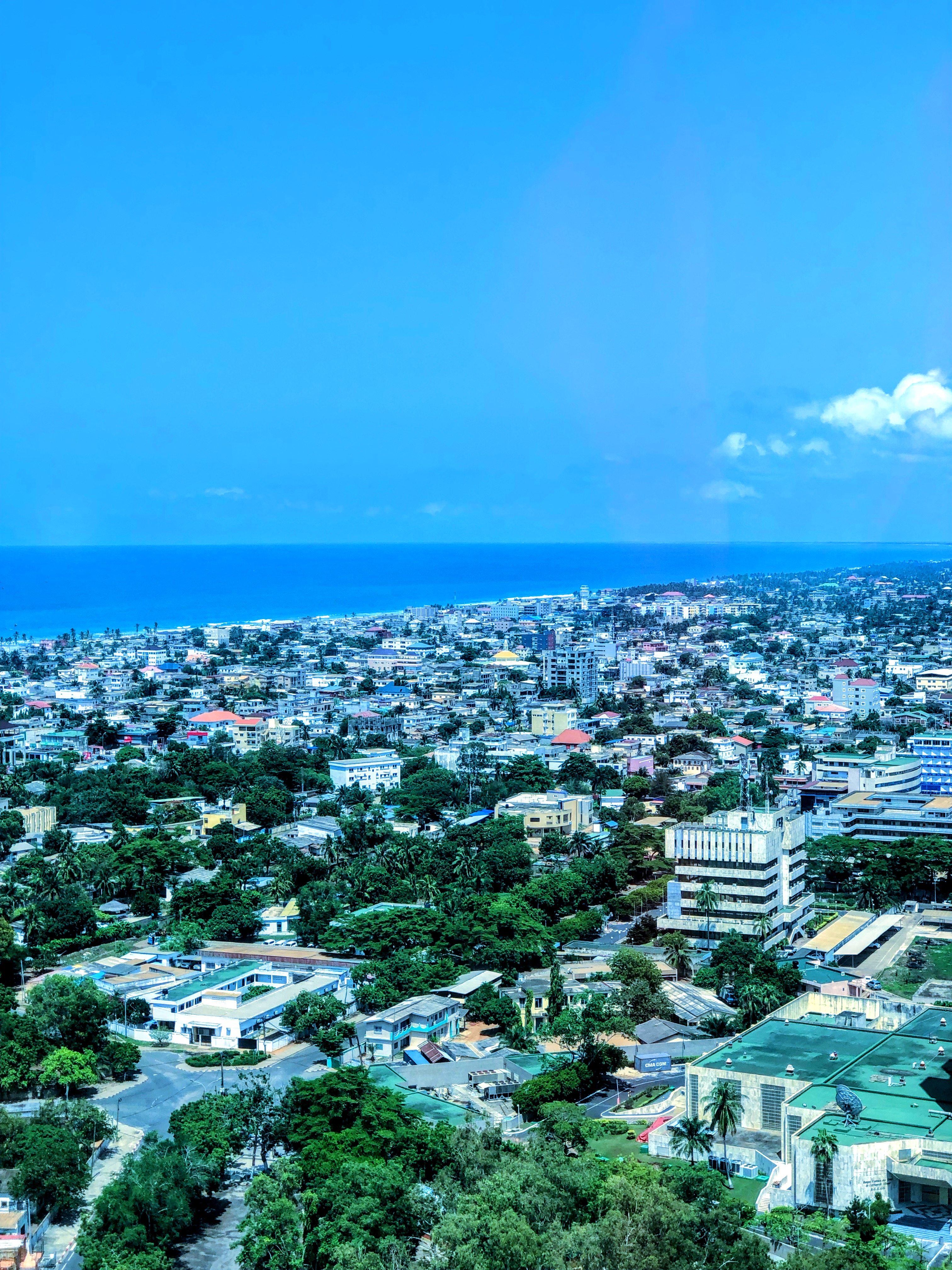
The name Lomé is a French simplification of the Ewe word Alomé (or Ahlome), which translates to 'among the alo trees.' The alo tree (Terminalia glaucescens) was historically abundant along this stretch of the Gulf of Guinea coast, providing the early Ewe inhabitants with wood for construction and bark for traditional medicine.
While Ewe fishing villages existed for centuries, the modern city took shape in the 1880s as a trade crossroads. In 1897, German colonial authorities moved the capital of Togoland to Lomé, attracted by its coastal access and flat terrain. The Germans built extensive infrastructure, including a landmark deep-water wharf and railways, attempting to make Togo a 'model colony.' Following Germany's defeat in World War I, the territory was split; the western part eventually joined Ghana, while the eastern part—including Lomé—became a French mandate.
Since Togo gained independence on April 27, 1960, Lomé has grown into a major regional commercial hub. It is famous for its Grand Marché, where the legendary 'Nana Benz'—powerful female merchants named for their preference for Mercedes-Benz cars—have historically dominated the textile trade across West Africa. The city is also globally recognized as the namesake for the Lomé Convention, a series of major trade and aid agreements between the European Union and ACP (African, Caribbean, and Pacific) nations.
Today, Lomé remains a rare example of a capital city located directly on an international border (with Ghana). It balances its colonial history with a vibrant modern identity as a port city, characterized by its palm-lined Atlantic beaches, its phosphate-driven economy, and its role as the undisputed political and cultural heart of the Togolese people.