Banjul

West Africa, Gambia
Gambia

People from Banjul are called:

Male/General:

Banjulian

Pronunciation:

/ˈbændʒuːl/

Quick Facts

Population:
413,397 (2024 est.)
Country:
Gambia
Region:
West Africa

Explore Banjul

Want to explore where Banjulians live? Here's the atlas that does it best:

National Geographic Atlas of the World

Highly detailed, stunning visuals

See more options

As an Amazon Associate we earn from qualifying purchases.

Etymology & Origin

The name Banjul originates from the Mandinka phrase Bang jul, most commonly translated as 'rope fiber.' This refers to the bamboo and plant fibers used by the indigenous Mandinka people to craft essential items like ropes, baskets, and fishing nets. Before colonial intervention, the site served as a vital seasonal market and fishing settlement at the mouth of the Gambia River.

In 1816, the British established a military outpost on the island to suppress the Atlantic slave trade. Following the Slave Trade Act of 1807, the settlement served as a strategic base for the West Africa Squadron to intercept slave ships and settle liberated Africans. The British named the town Bathurst after Henry Bathurst, the 3rd Earl Bathurst and Secretary of State for the Colonies.

Bathurst became a hub for the peanut (groundnut) trade, which sustained the colonial economy. The city developed a unique cultural blend of British colonial architecture and Aku (Creole) traditions. Despite its growth, the city's location on a narrow sand island (St. Mary's Island) severely restricted its physical expansion, leading to the development of larger mainland suburbs like Serekunda.

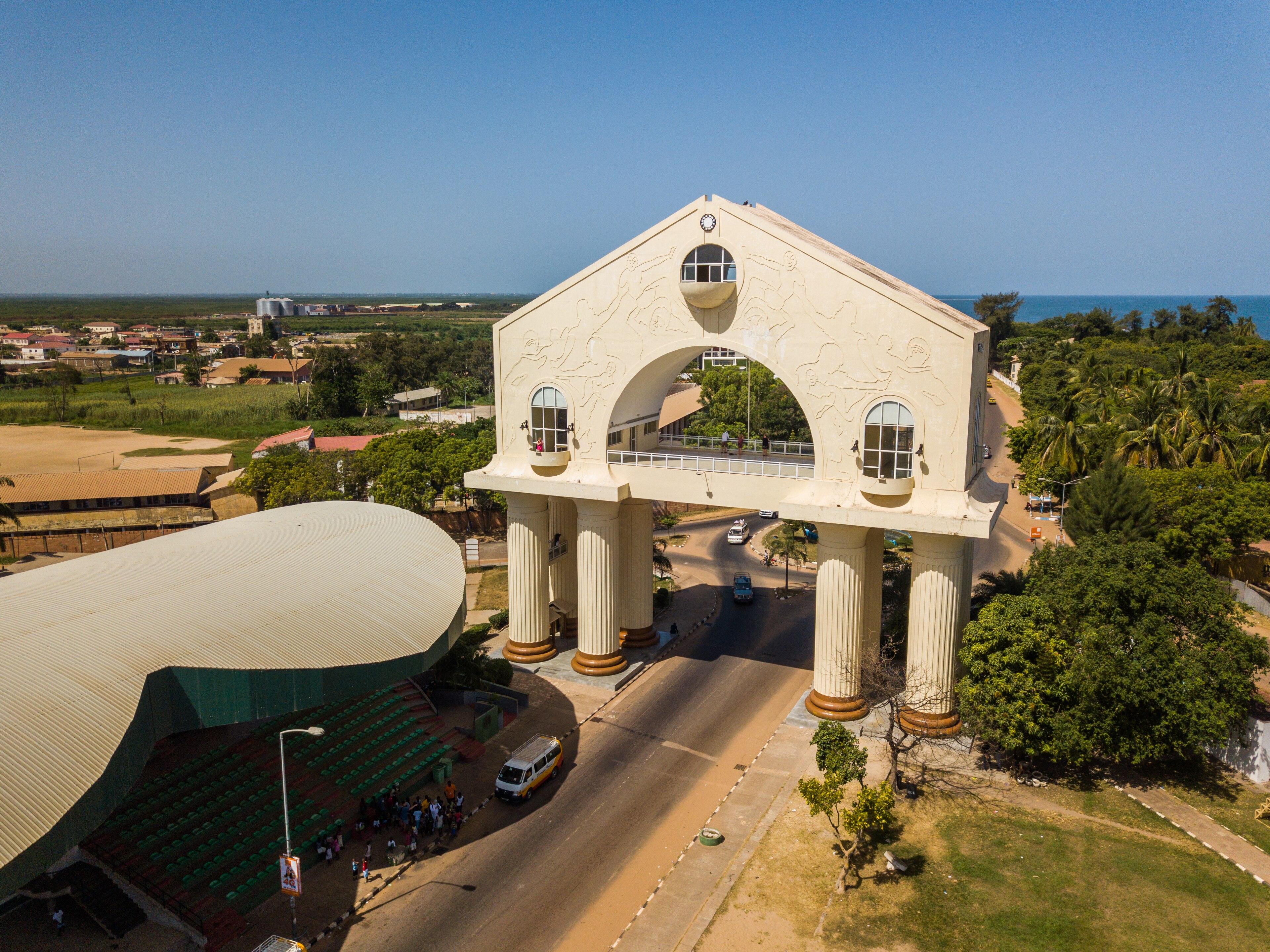
Following independence in 1965, the government sought to reclaim the nation’s indigenous identity. On April 24, 1973, the capital was officially renamed Banjul, restoring the original Mandinka toponym. Today, while it remains one of Africa's smallest capital cities by population, it stands as the symbolic and administrative heart of The Gambia.
Notable People Associated with Banjul

Generations of talented individuals have been associated with this vibrant place.

Politics & Leadership

Dawda Jawara

Barajally, Gambia

Founding father and first President of The Gambia who led the country to independence in 1965. He maintained democratic governance for nearly three decades before being overthrown in a 1994 coup.

First President of The GambiaIndependence LeaderDemocratic Governance

Civil Rights & Social Change

Jaha Dukureh

Banjul, Gambia

Human rights activist and founder of Safe Hands for Girls, campaigning against female genital mutilation (FGM). Her advocacy led to a ban on FGM in The Gambia and she was nominated for the Nobel Peace Prize.

Anti-FGM ActivistSafe Hands for Girls FounderNobel Peace Prize Nominee

About Banjul

  • Capital city of Gambia situated on St. Mary's Island.
  • Major port city and commercial center of the smallest mainland African country.
  • Historic colonial city founded by the British in 1816.
  • Important center for groundnut (peanut) trade and tourism.
  • Cultural hub known for its vibrant markets and traditional music.

Test Your Knowledge

Challenge yourself with our demonym quizzes and see how many you can get right!

Take a Quiz →