25 Most Unusual Demonyms: The Weirdest Names for People From Places
Discover the strangest demonyms in the English language—from Liverpudlians to Novocastrians. Learn the fascinating stories behind these unusual names for people from places.
Mainer
/ˈmeɪnər/
Want to explore where Mainers live? Here's the atlas that does it best:
Highly detailed, stunning visuals
As an Amazon Associate we earn from qualifying purchases.
The etymology of Maine remains uncertain, with several competing theories, though most scholars favor a connection to the French province of Maine (now part of the Pays de la Loire region). English explorers Sir Ferdinando Gorges and Captain John Mason, who received a land grant in 1622, are often credited with naming the territory. Mason had connections to the English village of Broadmayne in Dorset, while Gorges may have named it after the French province of Maine, where his family allegedly held estates.
Another prominent theory suggests the name derives from the nautical term "main" or "mainland," used by sailors to distinguish the continental coast from the numerous offshore islands. Early colonial documents frequently reference "the main" or "the Maine" when describing the coastal region. This practical maritime designation would have made sense given Maine's extensive coastline and the importance of fishing and shipping to early settlements.
Some historians propose that English explorers chose "Maine" to honor Queen Henrietta Maria of England, who held the title of "Queen of the Main" (referring to mainland territories). However, this theory has less documentary support. Early spellings in colonial records vary considerably: Mayne, Main, and Maine all appear in 17th-century documents, suggesting the name's pronunciation was established before its spelling standardized.
Maine was initially part of Massachusetts, governed under the Massachusetts Bay Colony charter. After decades as "the District of Maine," it achieved statehood as part of the Missouri Compromise, entering the Union as a free state on March 15, 1820, as the 23rd state. This compromise admitted Maine as a free state and Missouri as a slave state, maintaining the balance of power in Congress.
The demonym Mainer follows a simple pattern, adding the -er suffix (common for occupational and inhabitant nouns in English) directly to the place name. This straightforward formation contrasts with the more ornate -ian or -ite suffixes used by some states, reflecting Maine's reputation for plain-spoken, practical culture.
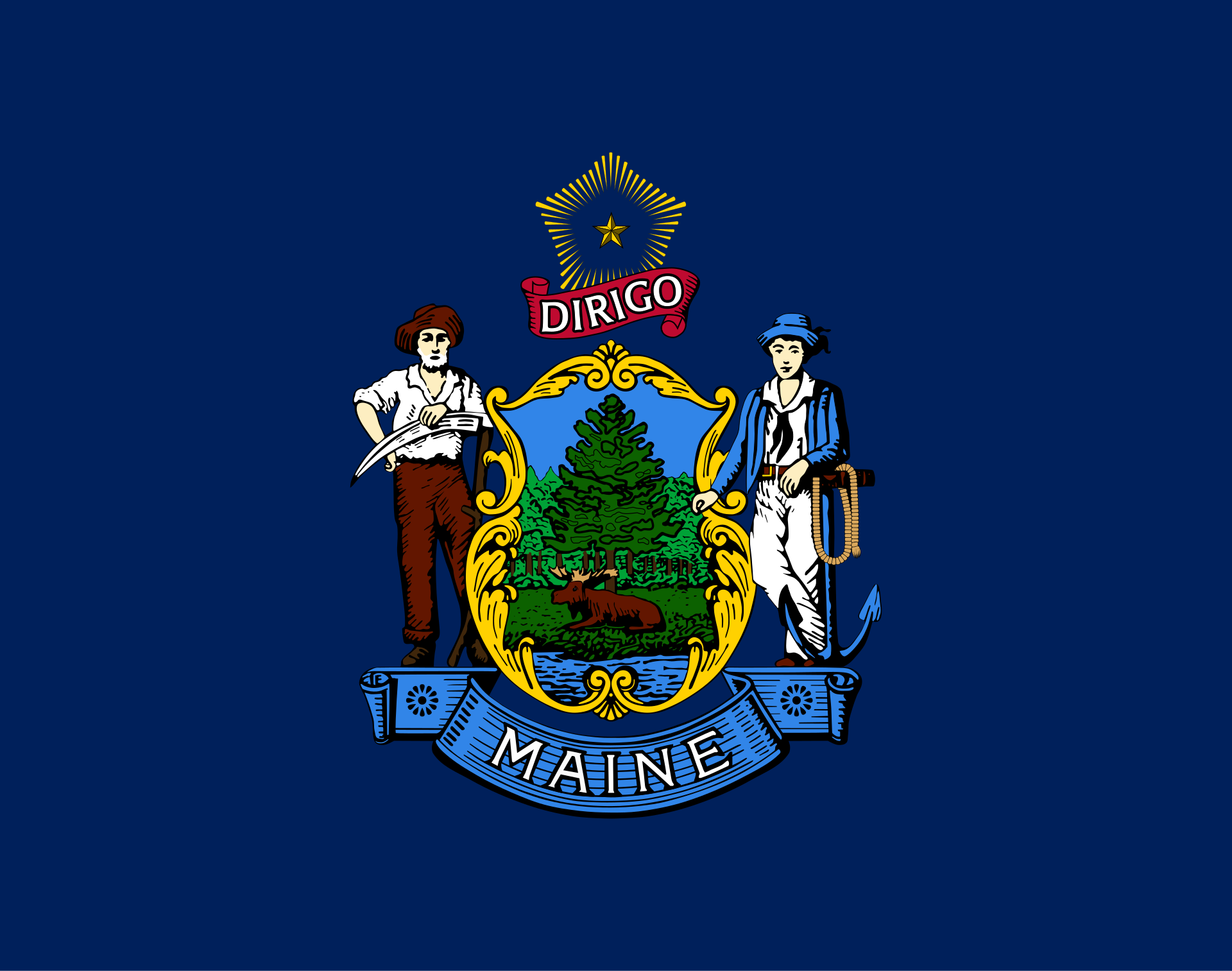
Numerous individuals with ties to this area have shaped culture, politics, and society.
Portland, Maine
A prolific author of horror, supernatural fiction, suspense, and fantasy novels, many of which are set in Maine.
Portland, Maine
A 19th-century poet and educator whose works include 'Paul Revere's Ride' and 'The Song of Hiawatha.'
Portland, Maine
An actress and singer known for her roles in 'Pitch Perfect,' 'Up in the Air,' and 'Into the Woods.'
Lewiston, Maine
An actor and race car driver best known for his role as Dr. Derek 'McDreamy' Shepherd on 'Grey's Anatomy.'
Brewer, Maine
A college professor who became a highly decorated Union officer during the American Civil War, known for his gallantry at Gettysburg.
Skowhegan, Maine
A politician who served as both a U.S. Representative and a U.S. Senator, and was the first woman to be nominated for the presidency by a major party.
Cape Elizabeth, Maine
A marathon runner who won the gold medal at the 1984 Summer Olympics, the first year the women's marathon was held.
Greenwood, Maine
The outdoorsman and entrepreneur who founded the retail company L.L.Bean.
Other places in the region and their demonyms
Want to explore where Mainers live? Here's the atlas that does it best:
Highly detailed, stunning visuals
As an Amazon Associate we earn from qualifying purchases.
Challenge yourself with our demonym quizzes and see how many you can get right!
Take a Quiz →Discover the strangest demonyms in the English language—from Liverpudlians to Novocastrians. Learn the fascinating stories behind these unusual names for people from places.
Explore the fascinating etymology behind demonyms. Learn how Greek, Latin, Germanic, and other language families shape the names we call people from different places.
Challenge yourself with our demonym quizzes and see how many you can get right!
Take a Quiz →Discover demonyms from other places in this region