25 Most Unusual Demonyms: The Weirdest Names for People From Places
Discover the strangest demonyms in the English language—from Liverpudlians to Novocastrians. Learn the fascinating stories behind these unusual names for people from places.
Cairene
/kaɪˈriːn/
Want to explore where Cairenes live? Here's the atlas that does it best:
Highly detailed, stunning visuals
As an Amazon Associate we earn from qualifying purchases.
The term 'Cairene' derives from the city name Cairo, which has fascinating linguistic and astrological origins deeply embedded in Islamic history. The Arabic name al-Qāhirah (القاهرة) literally translates to 'The Victorious' or 'The Vanquisher', a name loaded with historical significance and celestial meaning.
The city was founded on August 8, 969 CE by General Jawhar al-Siqilli on behalf of the Fatimid Caliph al-Mu'izz li-Din Allah. According to medieval chronicles, astrologers were consulted to determine the most auspicious moment for laying the foundation. Legend recounts that bells attached to ropes were to be rung at the precise astrologically favorable instant, signaling workers to begin construction. However, a raven landed on the rope and rang the bells prematurely—at the exact moment when the planet Mars (al-Najm al-Qāhir, 'the Conquering Star') was in the ascendant. Since Mars was considered the planet of war and conquest in Islamic astrology, the city was named al-Qāhirah to reflect this martial omen.
Locally, Egyptians more commonly refer to their capital simply as Maṣr (مصر) or Miṣr, which is also the Arabic name for Egypt itself. This dual meaning—where the same word denotes both the country and its capital—emphasizes Cairo's central, almost synonymous role in Egyptian national identity. This linguistic phenomenon dates back millennia; even in ancient times, the name of Egypt (Hwt-ka-Ptah in Ancient Egyptian, meaning 'House of the Soul of Ptah') referred to the capital Memphis.
Historically, the site was preceded by earlier capitals: the ancient Pharaonic capital of Memphis, the Roman fortress city of Babylon-in-Egypt, and the early Islamic capital al-Fusṭāṭ (founded 641 CE). The demonym 'Cairene' follows English conventions for city dwellers, and the city is often poetically called Umm al-Dunyā (أم الدنيا), meaning 'Mother of the World', reflecting its ancient prestige as a center of learning, culture, and Islamic scholarship.
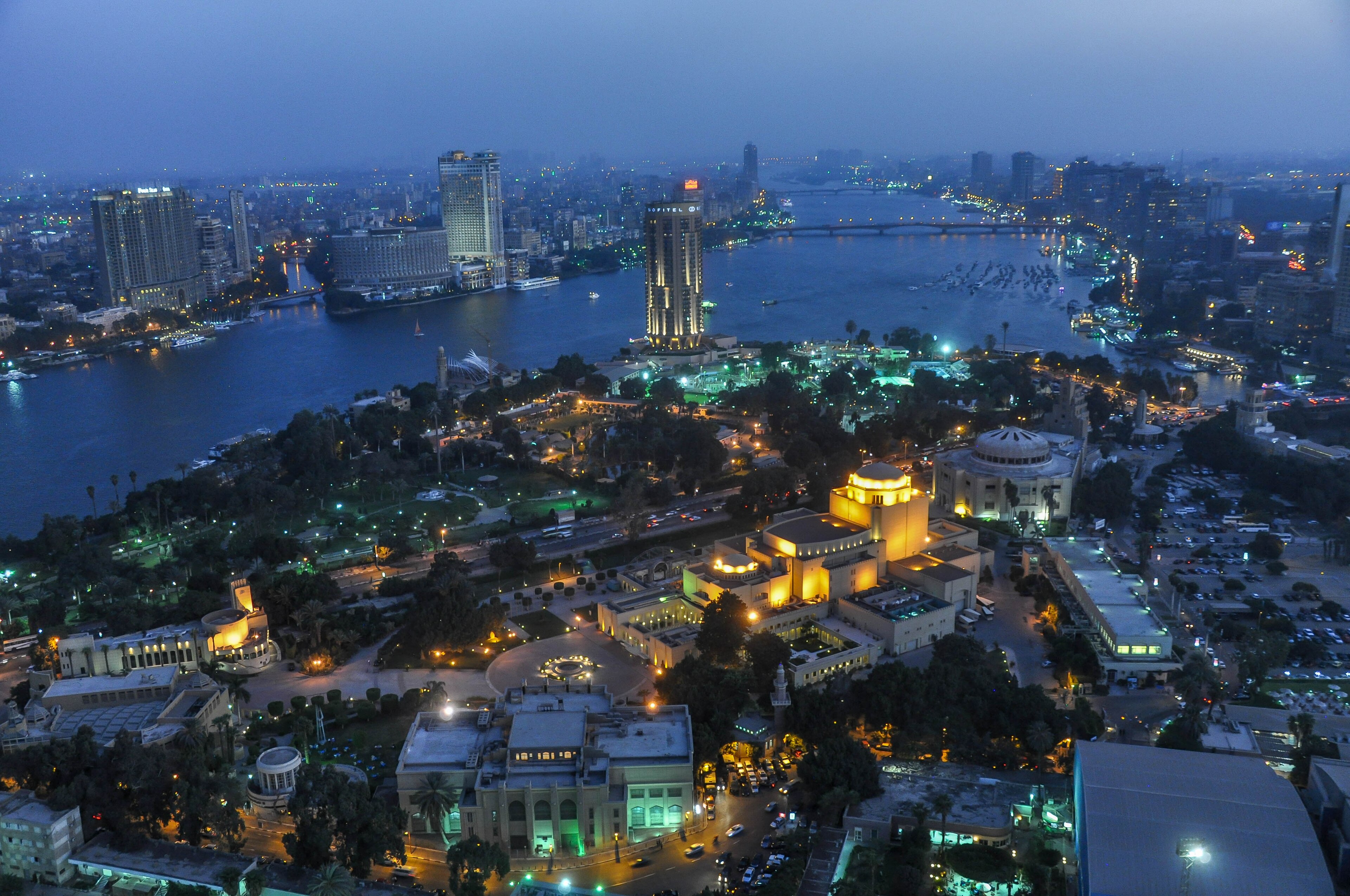
Cairenes and those associated with this region have made significant contributions to the world.
Cairo, Egypt
The first Arabic-language writer to win the Nobel Prize in Literature, Mahfouz spent his entire life in Cairo. His 'Cairo Trilogy' is considered one of the greatest works of Arabic literature, chronicling Egyptian life through generations.
Cairo, Egypt
Dalida (1933-1987) was an internationally acclaimed singer who sold over 140 million records worldwide throughout her career. She topped charts across France, Europe, and Latin America with iconic hits including 'Bambino', 'Paroles paroles', and 'Gigi l'amoroso', performing in 11 languages. She was the first woman in France to receive a gold disc and received the Medal of the President of the Republic from Charles de Gaulle.
Cairo, Egypt
Mohamed ElBaradei (born 1942) is an Egyptian lawyer and diplomat who served as Director General of the International Atomic Energy Agency from 1997 to 2009. He was awarded the Nobel Peace Prize in 2005 jointly with the IAEA for efforts to prevent nuclear energy from being used for military purposes. He opposed the 2003 Iraq invasion and served briefly as Vice President of Egypt in 2013.
Other places in the region and their demonyms
Want to explore where Cairenes live? Here's the atlas that does it best:
Highly detailed, stunning visuals
As an Amazon Associate we earn from qualifying purchases.
Challenge yourself with our demonym quizzes and see how many you can get right!
Take a Quiz →Discover the strangest demonyms in the English language—from Liverpudlians to Novocastrians. Learn the fascinating stories behind these unusual names for people from places.
Explore the fascinating etymology behind demonyms. Learn how Greek, Latin, Germanic, and other language families shape the names we call people from different places.
Challenge yourself with our demonym quizzes and see how many you can get right!
Take a Quiz →