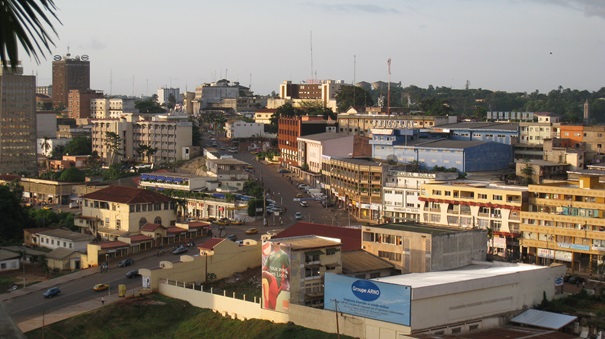
The term 'Yaoundéan' and the city name Yaoundé derive directly from the Ewondo people (also spelled Yaunde or Jaunde), a Bantu ethnic group indigenous to Cameroon's central forest region. The Ewondo are part of the larger Bèti-Pahuin (or Fang-Beti) ethnic cluster, which includes related groups like the Eton, Manguissa, and Mvele peoples. The name Yaoundé is essentially a French phonetic rendering of Ewondo or Yaunde, the autonym (self-name) of this people.
The Ewondo language (also called Ewondo or Yaunde language, part of the Bantu language family) was spoken throughout the region when European explorers arrived. The people called themselves Bèti be Kolo or simply Ewondo, and their territory was known by variants of this name. When German explorers and traders entered the area in the late 19th century, they transcribed the name as Jaunde (using German phonetic conventions where 'J' represents the 'Y' sound), and this became the standard German colonial spelling.
The city was founded in 1888 by German explorer and military officer Richard Kund and scientist Hans Tappenbeck, who were leading expeditions into the interior of what would become German Kamerun (German Cameroon). They established a research station and military outpost at the site, which was strategically located in fertile highlands about 750 meters (2,460 feet) above sea level, providing a cooler climate than the hot, humid coastal regions. The Germans chose the location partly because it was inhabited by the Ewondo, whom they viewed as more cooperative than some coastal groups, and partly for its position as a center for ivory and rubber trade from the interior forests.
German colonization of Kamerun (1884-1916) developed Jaunde as an administrative and commercial center. The Germans established plantations, built infrastructure, and used the city as a base for extending control into the interior. Following Germany's defeat in World War I, the League of Nations divided German Kamerun between Britain and France under mandate in 1919. The eastern portion (about 80% of the territory) went to France, while the western strip went to Britain.
The French renamed the city Yaoundé, adapting the German Jaunde to French phonetic spelling and pronunciation conventions. In 1922, the French colonial administration designated Yaoundé as the capital of French Cameroun, replacing Douala (the larger coastal commercial center). The French chose Yaoundé for its strategic central location, cooler highland climate (more comfortable for European administrators), and healthier conditions (with fewer tropical diseases like malaria compared to coastal areas). The city's elevation and inland position made it a natural administrative hub from which to control the entire territory.
When Cameroun gained independence from France on January 1, 1960, Yaoundé continued as the capital of the new nation. It later remained capital when French Cameroun and part of British Cameroons merged to form the Federal Republic of Cameroon on October 1, 1961 (later renamed the Republic of Cameroon). Today, Yaoundé serves as the political capital, while Douala remains the economic capital and largest city. The city is built across seven hills, earning it the nickname 'City of Seven Hills'.
The demonym 'Yaoundéan' follows English conventions, though French sources use Yaoundéen (masculine) or Yaoundéenne (feminine). In Ewondo language, people of Yaoundé might be called Beti be Yaoundé (using the Bantu prefix be- for people).