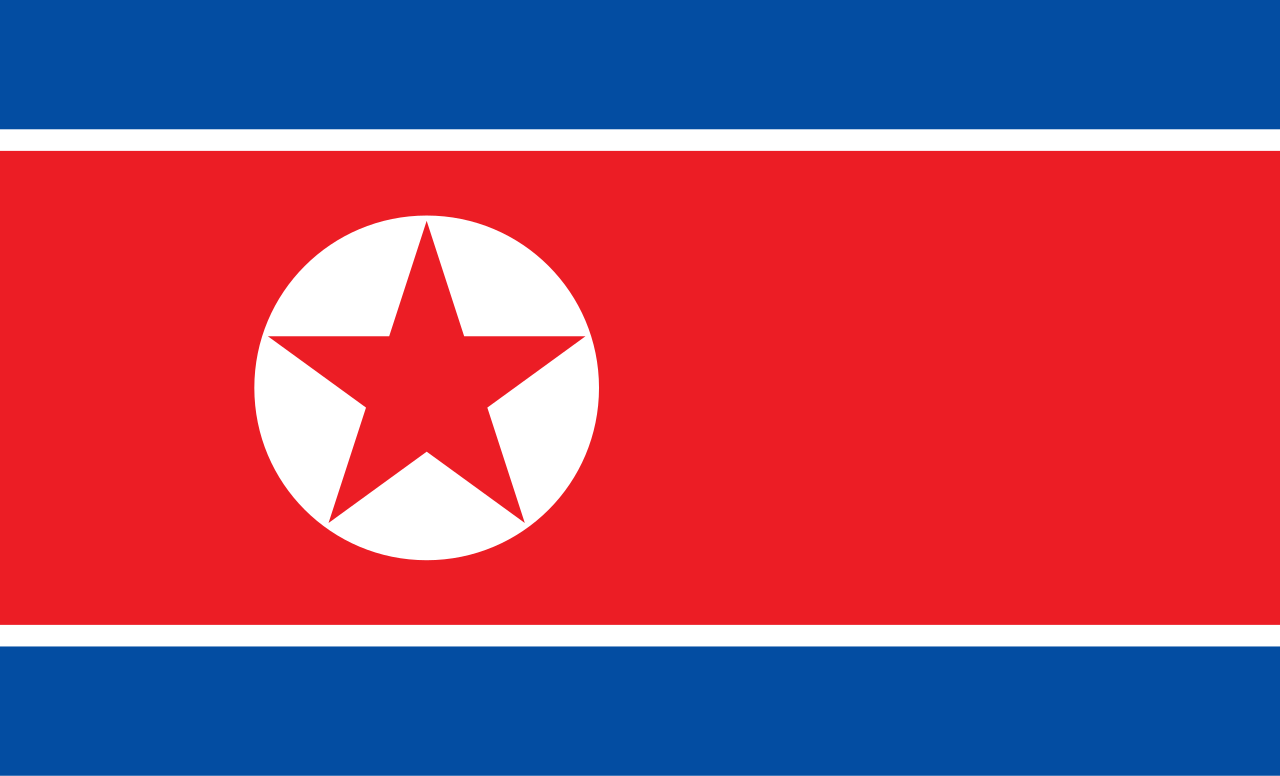
What Are People From North Korea Called?Flag of North Korea

East Asia, North Korea
North Korea

People from North Korea are called:

People from North Korea are called North Korean.

Demonym:

North Korean

Pronunciation:

/ˌnɔːrθ kəˈriən/

About North Korea

  • Capital and largest city: Pyongyang, known for monumental architecture and organized mass displays.
  • Officially the Democratic People's Republic of Korea (DPRK), established in 1948.
  • Socialist state with a centralized command economy based on the ideology of Juche (self-reliance).
  • Korean peninsula divided since 1945, with the Korean War (1950-1953) ending in armistice without a peace treaty.
  • Known for mountainous terrain (80% of country), isolated international position, and unique political system.

Quick Facts

Population:
26,160,821 (2024 est.)
Country:
North Korea
Region:
East Asia

Explore North Korea

Want to explore where North Koreans live? Here's the atlas that does it best:

National Geographic Atlas of the World

Highly detailed, stunning visuals

▶See more options

As an Amazon Associate we earn from qualifying purchases.

Etymology & Origin

The term 'North Korean' and the name North Korea share the same etymological roots as South Korea, deriving from 'Goryeo' (고려), the medieval Korean kingdom that gave the peninsula its Western name. However, North Korea officially uses different nomenclature that reflects its distinct political ideology and historical interpretation. The country's official name is the 'Democratic People's Republic of Korea' (DPRK), but more significantly, in Korean it is called 'Joseon Minjujuui Inmin Gonghwaguk' (조선민주주의인민공화국).

The key distinction lies in North Korea's use of 'Joseon' (조선) rather than 'Hanguk', the term preferred in South Korea. 'Joseon' references the Joseon Dynasty (1392-1910), the last unified Korean kingdom before Japanese colonization, which ruled for over 500 years and is considered a golden age of Korean culture, philosophy, and scientific achievement. The dynasty's name derives from 'Gojoseon' (고조선, c. 2333 BCE-108 BCE), meaning 'Old Joseon', which according to Korean foundation mythology was established by the legendary king Dangun. By adopting 'Joseon', North Korea emphasizes continuity with pre-division Korean history and rejects the 'Han' terminology used by South Korea.

During the Japanese colonial period (1910-1945), Korea was officially called 'Chōsen' (朝鮮) in Japanese, the Japanese reading of the same Chinese characters for Joseon. After liberation from Japan in 1945, the peninsula was divided along the 38th parallel, with Soviet forces occupying the north and American forces the south. This division became permanent after the Korean War (1950-1953), which ended in an armistice but never a peace treaty, leaving the two Koreas technically still at war.

In North Korean ideology, 'Joseon saram' (조선 사람) or 'Joseon-in' (조선인) refers to all ethnic Koreans, emphasizing the unity of the Korean people across the division. The term 'Bukjoseon' (북조선, North Joseon) is sometimes used informally, though the official designation remains DPRK. The North Korean government considers itself the legitimate government of the entire Korean peninsula, as does South Korea, creating parallel claims of sovereignty.

The demonym 'North Korean' in English is a geographical descriptor distinguishing nationals of the DPRK from those of the Republic of Korea (South Korea). In international discourse, the terms 'North Korea/South Korea' are standard, though the DPRK officially prefers 'DPRK/ROK' or 'Joseon/Hanguk'. The division of nomenclature—Joseon versus Hanguk—mirrors the deep political, ideological, and social divisions that have characterized the peninsula since 1945, despite sharing a common language, ethnic heritage, and pre-1945 history.
Notable People Associated with North Korea

North Koreans and those associated with this region have made significant contributions to the world.

Politics & History

Kim Il-sung (김일성)

Mangyongdae, near Pyongyang, Korea (then under Japanese rule)

Kim Il-sung (1912-1994) was the founding leader of North Korea, serving as Premier (1948-1972) and President (1972-1994). A guerrilla fighter against Japanese occupation, he established the DPRK in 1948 under Soviet backing and led North Korea through the Korean War. He developed the Juche ideology of self-reliance, which became the country's guiding philosophy. His personality cult remains central to North Korean politics, and he is still officially the 'Eternal President' of the DPRK, with his grandson Kim Jong-un continuing the Kim dynasty's rule.

Founding leader of DPRK 1948-1994anti-Japanese guerrilla fighterKorean War leaderJuche ideology creatorestablished dynastic succession'Eternal President' title

Media & Broadcasting

Ri Chun-hee (리춘희)

North Korea

Ri Chun-hee (born 1943) is North Korea's most famous news anchor, known internationally as the 'Pink Lady' for her signature pink traditional Korean dress. She has been the primary announcer for Korean Central Television since the 1970s, delivering major state announcements including news of nuclear tests, leadership deaths, and missile launches with her distinctive passionate and dramatic delivery style. Her distinctive broadcasting style has become iconic, and she remains a symbol of North Korean state media, coming out of retirement for the most significant national announcements.

Legendary KCTV news anchor since 1970s'Pink Lady' nicknameannounces major state eventsdramatic delivery styleiconic voice of DPRK state media

Politics & Economics

Pak Pong-ju (박봉주)

North Korea

Pak Pong-ju (born 1939) is a North Korean politician who served as Premier twice (2003-2007, 2013-2019) and was known for implementing limited market-oriented reforms to North Korea's command economy. A chemical engineer by training, he pushed for pragmatic economic policies including the expansion of markets, enterprise autonomy, and wage reforms. Though operating within strict ideological constraints, his tenure represented North Korea's most significant economic policy adjustments since the 1990s famine, attempting to modernize the economy while maintaining the socialist system.

Premier of North Korea (2003-20072013-2019)economic reformerimplemented market-oriented policieschemical engineerpragmatic policy approach

Test Your Knowledge

Challenge yourself with our demonym quizzes and see how many you can get right!

Take a Quiz →