What Is a Demonym? Definition, Meaning, and Examples
A demonym is the word for people from a place — like 'Parisian,' 'Texan,' or 'Japanese.' Learn the demonym definition, how demonyms are formed, and how they differ from nationality and ethnicity.

People from Mongolia are called Mongolian.
Mongolian
/mɒŋˈɡoʊliən/
Want to explore where Mongolians live? Here's the atlas that does it best:
Highly detailed, stunning visuals
As an Amazon Associate we earn from qualifying purchases.
The term 'Mongolian' derives from 'Mongolia', which means 'Land of the Mongols' in Latin. The name 'Mongol' itself has uncertain etymology but likely originated from 'Mugulü' (木骨閭), the 4th-century founder of the Rouran Khaganate. Historical Chinese texts from the Tang dynasty (8th century) first recorded the term 'Mungu' (蒙兀) to describe a branch of the Shiwei people, with the characters meaning approximately 'Meng' (蒙) and 'wu' (兀). This designation evolved through Middle Chinese as Muwngu (蒙兀), eventually becoming 'Mongol' in Western languages through Persian and European transmission during the medieval period.
The term 'Mongol' briefly appeared in 8th-century Tang Chinese records, then resurfaced prominently in the late 11th century during the Khitan-ruled Liao dynasty. After the Liao's fall in 1125, the Khamag Mongols became a leading confederation on the Mongolian Plateau. However, their continuous wars with the Jurchen-ruled Jin dynasty and the Tatar confederation weakened them significantly. The last Khamag leader was Yesügei, whose son Temüjin would transform Mongol history forever.
In 1206, Temüjin took the title 'Genghis Khan' (meaning 'universal ruler') and united the disparate Mongol tribes into the Mongol Empire, eventually creating the largest contiguous land empire in human history. In the 13th century, the word 'Mongol' expanded from denoting a specific tribe to becoming an umbrella term for a large group of Mongolic-speaking tribes united under Genghis Khan's rule. This political unification created a shared identity that transcended earlier tribal divisions, establishing 'Mongol' as both an ethnic and imperial designation.
The demonym 'Mongolian' in English follows the standard pattern of adding '-ian' to place names. Internally, the country is called 'Mongol Uls' (Монгол Улс) in the Mongolian language, meaning 'Mongol Nation' or 'State of Mongolia.' The Mongolian script name is ᠮᠣᠩᠭᠣᠯ ᠤᠯᠤᠰ (Mongγol ulus). Following independence from Qing dynasty rule in 1911 and subsequent revolutionary changes, the official name 'Mongolian People's Republic' was used from 1924 to 1992, when the current constitution established the simple name 'Mongolia' (Mongol Uls).
Throughout history, various alternative etymological theories have been proposed, including derivation from 'Mongkhe-tengri-gal' (meaning 'Eternal Sky Fire'), though scholarly consensus favors the Mugulü/Rouran connection. The Mongol people also use 'Khalkha' to refer to the majority ethnic group within Mongolia, accounting for about 86% of ethnic Mongols in the country, while 'Mongolian' encompasses all citizens and ethnic Mongols across the broader Mongol heartland spanning Mongolia, Inner Mongolia (China), and parts of Russia.
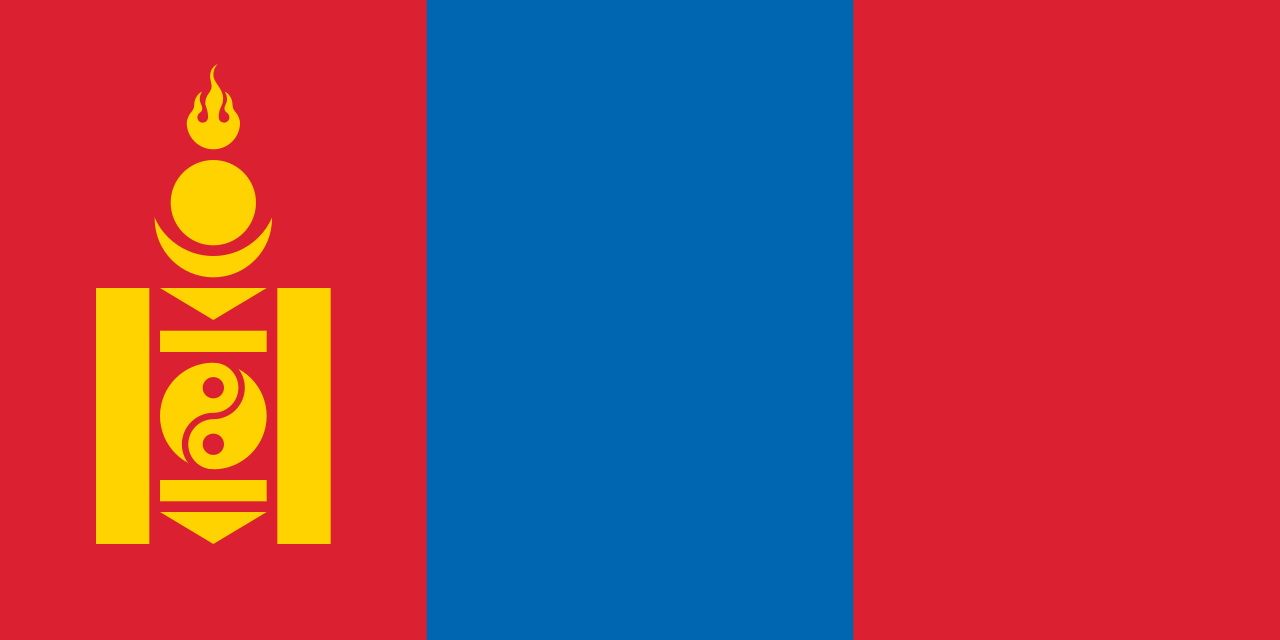
Generations of talented individuals have been associated with this vibrant place.
Near Burkhan Khaldun mountain, Mongolia (then tribal territories)
Genghis Khan (c. 1162-1227), born Temüjin, was the founder and first Great Khan of the Mongol Empire, which became the largest contiguous land empire in history after his death, covering 33 million km² (22% of Earth's land area). A brilliant military strategist and administrator, he united the nomadic Mongol tribes through a combination of military prowess, innovative tactics, and meritocratic governance. He established the Yassa legal code, promoted religious tolerance, implemented a sophisticated postal system (Yam), and encouraged trade along the Silk Road. His conquests fundamentally reshaped Eurasian history, facilitating the Pax Mongolica period of unprecedented cultural and technological exchange between East and West.
Mongolia
Kublai Khan (1215-1294) was the fifth Great Khan of the Mongol Empire and founder of the Yuan dynasty in China (1271-1368), making him the first non-Han Chinese emperor to rule all of China. Grandson of Genghis Khan, he moved the Mongol capital from Karakorum to Dadu (modern Beijing), blending Mongol and Chinese governance systems. Unlike his predecessors, Kublai favored settled administration over nomadic conquest, promoting arts, sciences, and trade. He famously hosted Marco Polo at his court, rebuilt the Grand Canal, expanded paper currency use, and patronized diverse religions. His reign represented the height of Mongol power and the cultural synthesis of the Mongol Empire with Chinese civilization.
Mongolia
Zanabazar (1635-1723) was the first Jebtsundamba Khutughtu, the spiritual head of Tibetan Buddhism in Mongolia, and one of Central Asia's greatest artists and scholars. Born into Mongol nobility as a direct descendant of Genghis Khan, he became a prominent sculptor, architect, scholar, and religious leader. He created the Soyombo script and refined Mongolian script, designed iconic Buddhist sculptures that influenced Mongolian art for centuries, established major monasteries including Shankh Monastery, and served as both spiritual guide and political mediator during tumultuous Qing-Mongol relations. His artistic masterpieces, particularly his gilt-bronze sculptures of Buddhist deities (the 'Five Dhyani Buddhas'), are considered among the finest examples of Buddhist art, displaying extraordinary technical skill and spiritual depth.
Other places in the region and their demonyms
Want to explore where Mongolians live? Here's the atlas that does it best:
Highly detailed, stunning visuals
As an Amazon Associate we earn from qualifying purchases.
Challenge yourself with our demonym quizzes and see how many you can get right!
Take a Quiz →A demonym is the word for people from a place — like 'Parisian,' 'Texan,' or 'Japanese.' Learn the demonym definition, how demonyms are formed, and how they differ from nationality and ethnicity.
From Angelenos and Phoenicians to Minneapolitians and Salt Lakers, discover 25 U.S. city demonyms that break normal grammar rules, along with the fascinating history behind them.
Challenge yourself with our demonym quizzes and see how many you can get right!
Take a Quiz →